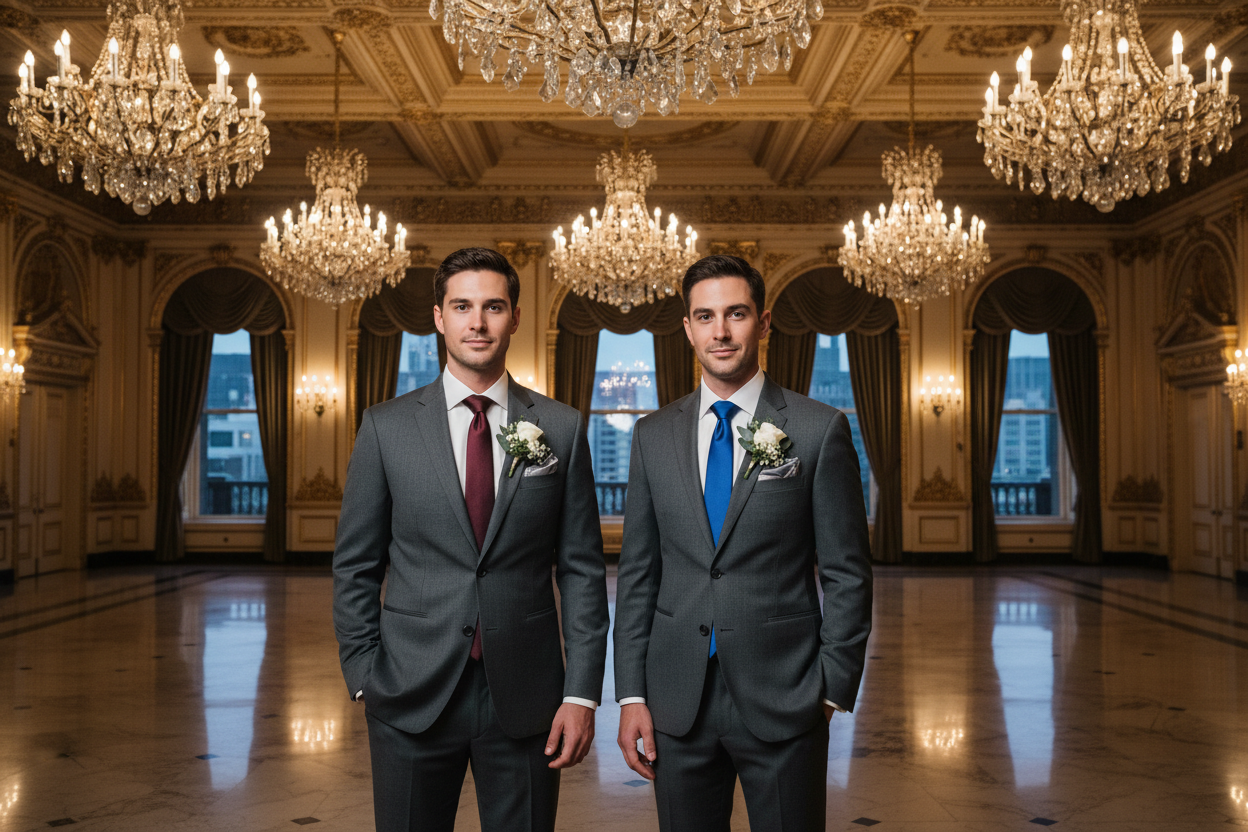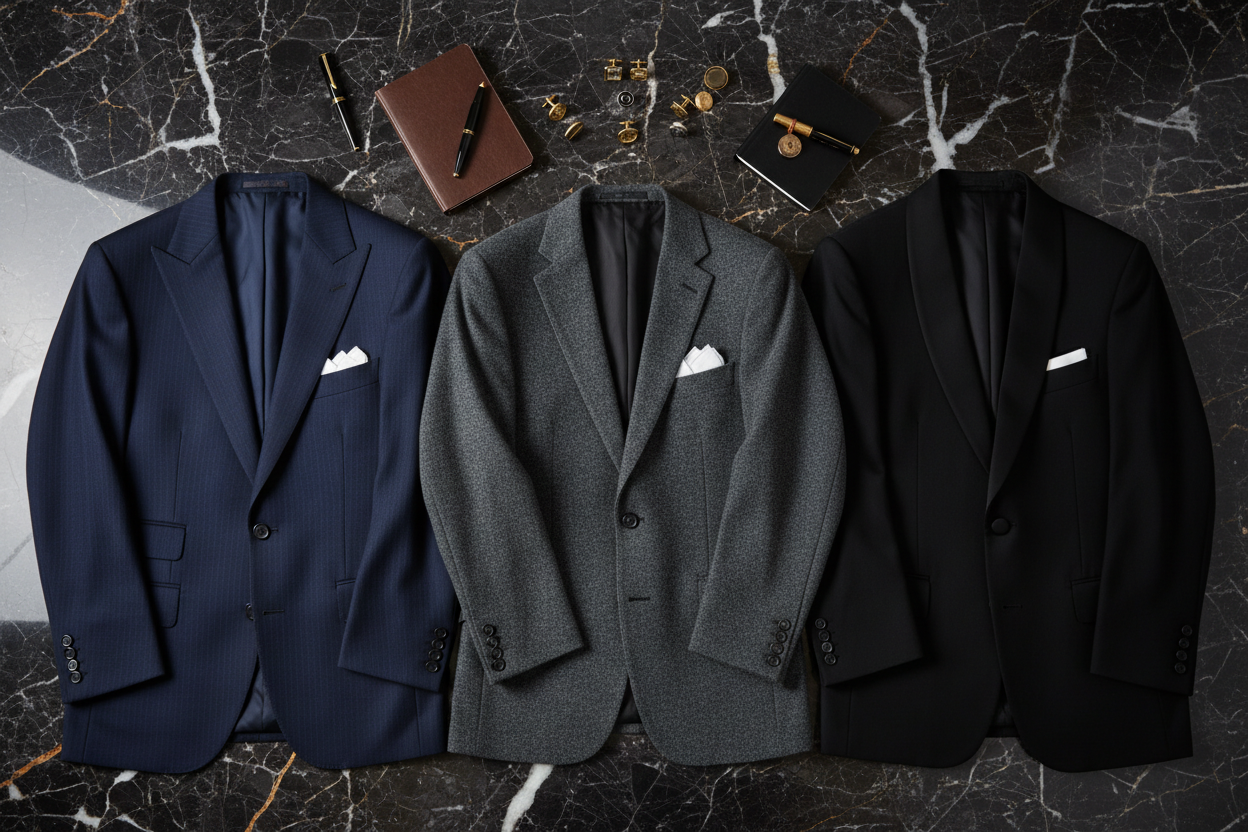
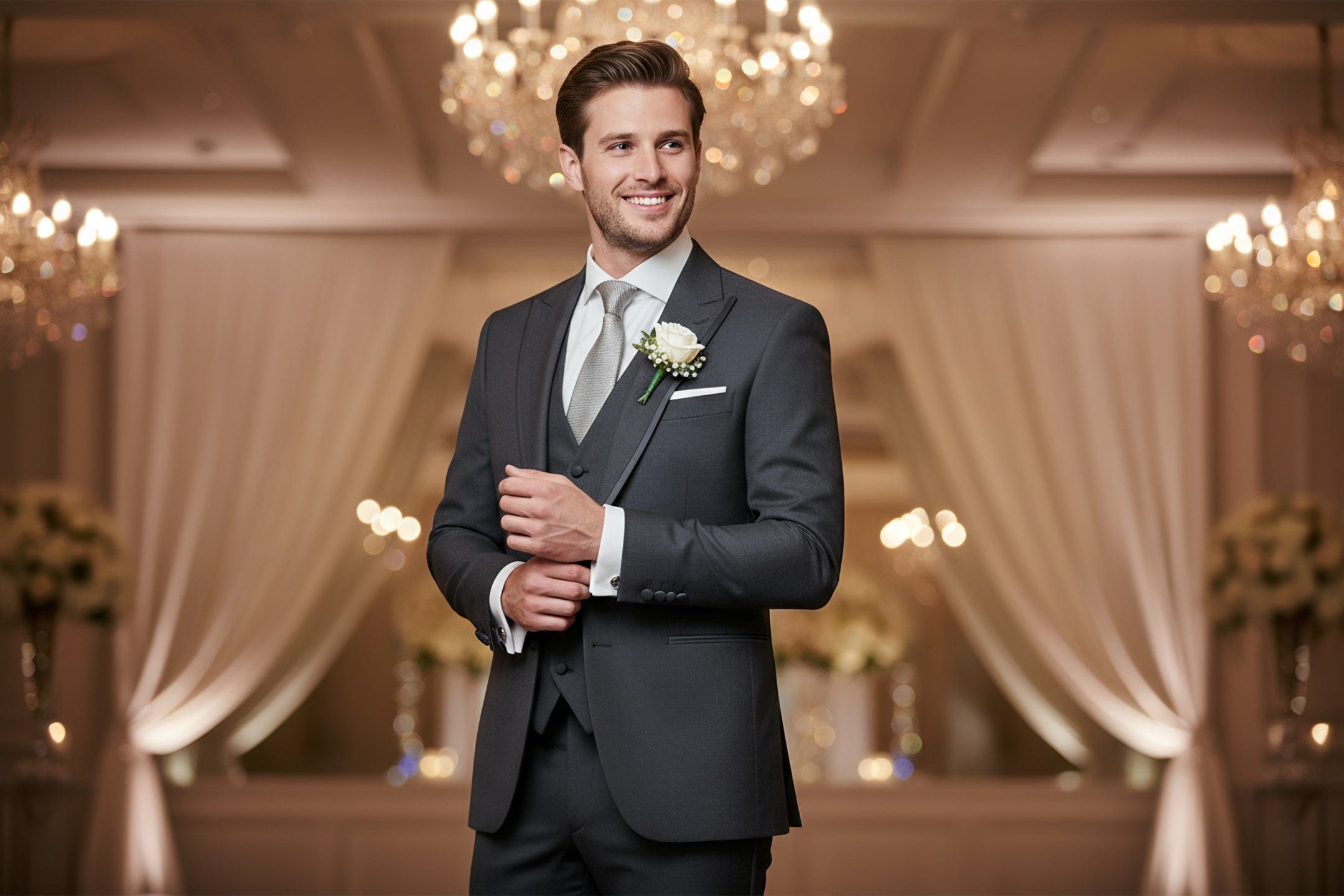
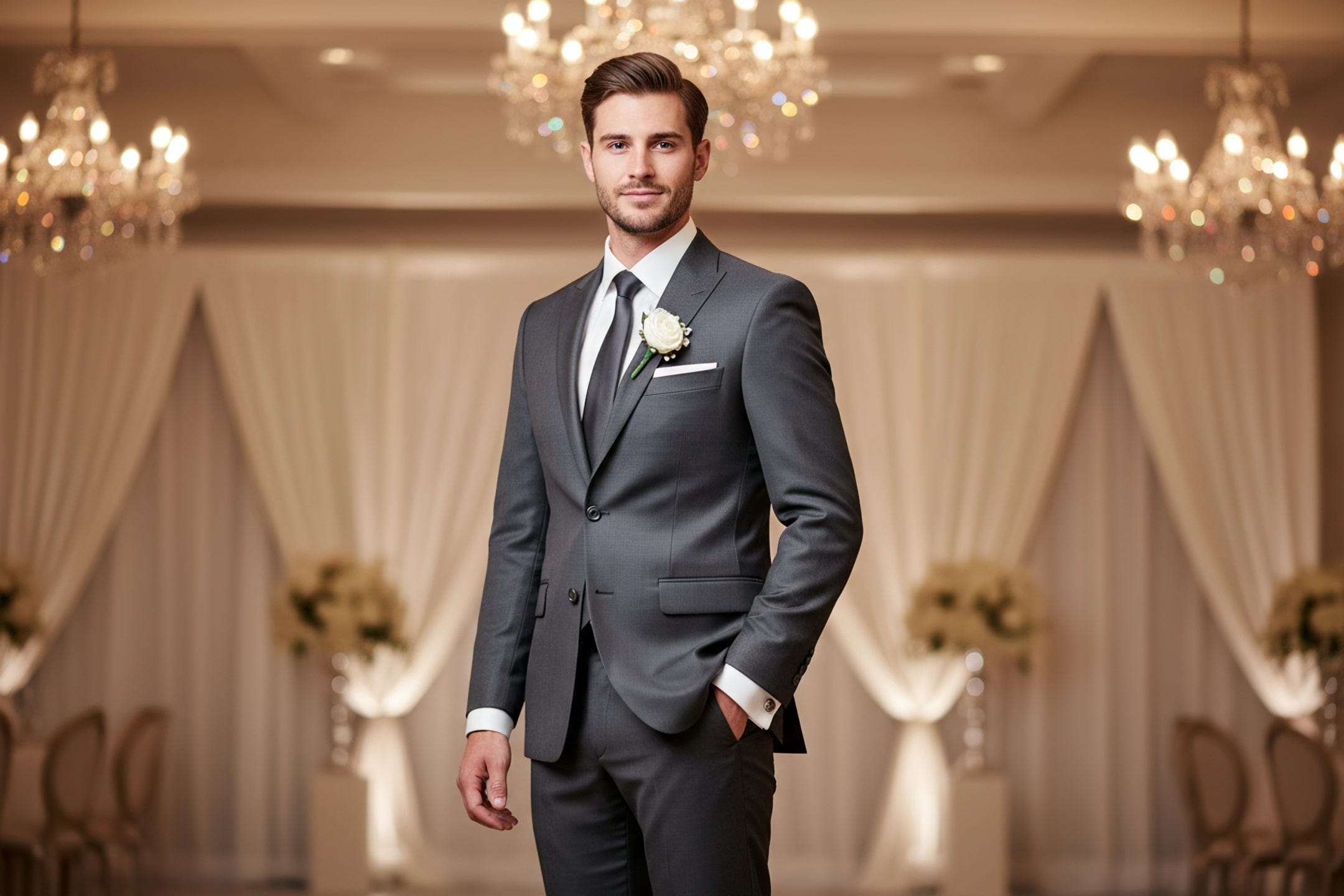
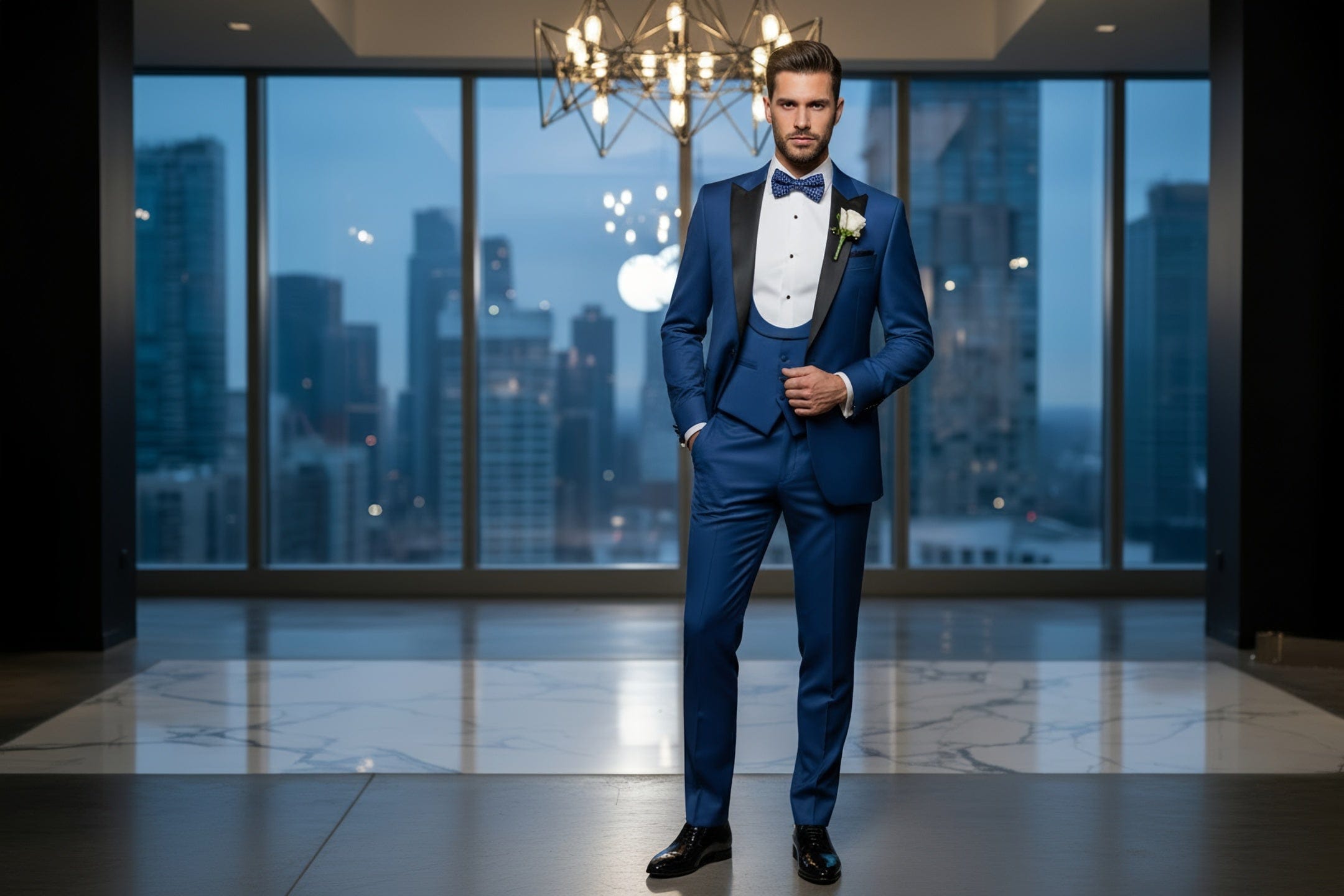


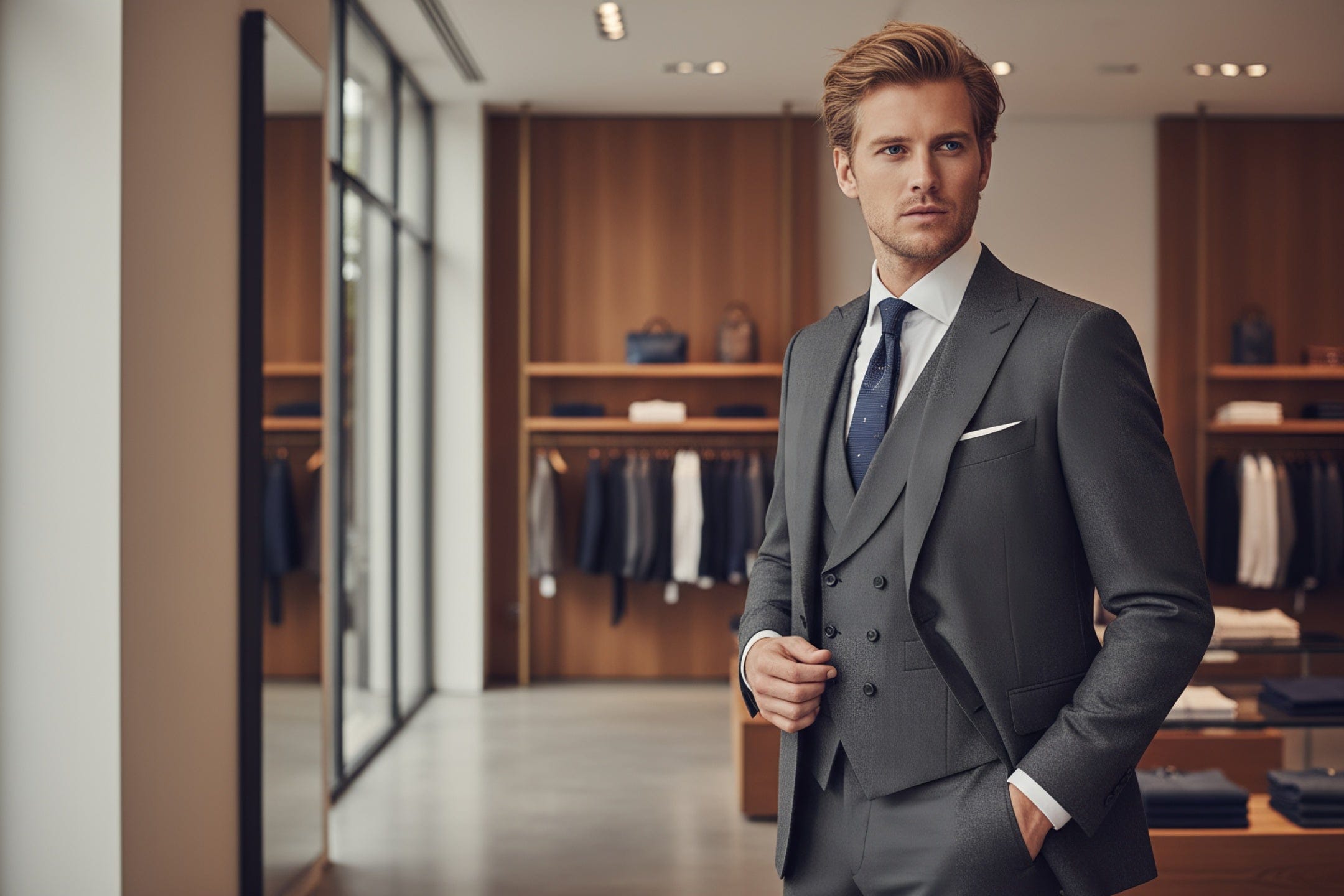
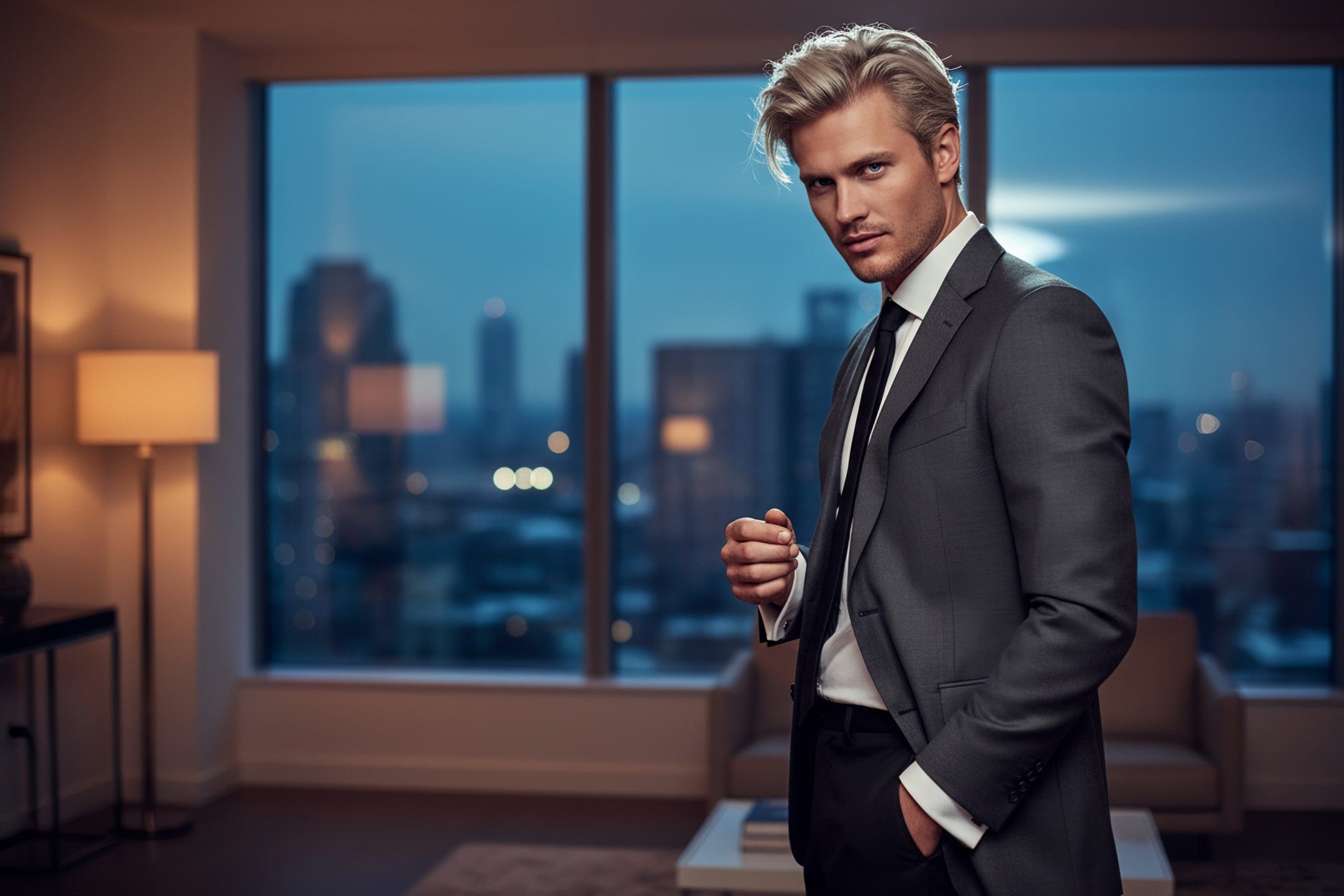
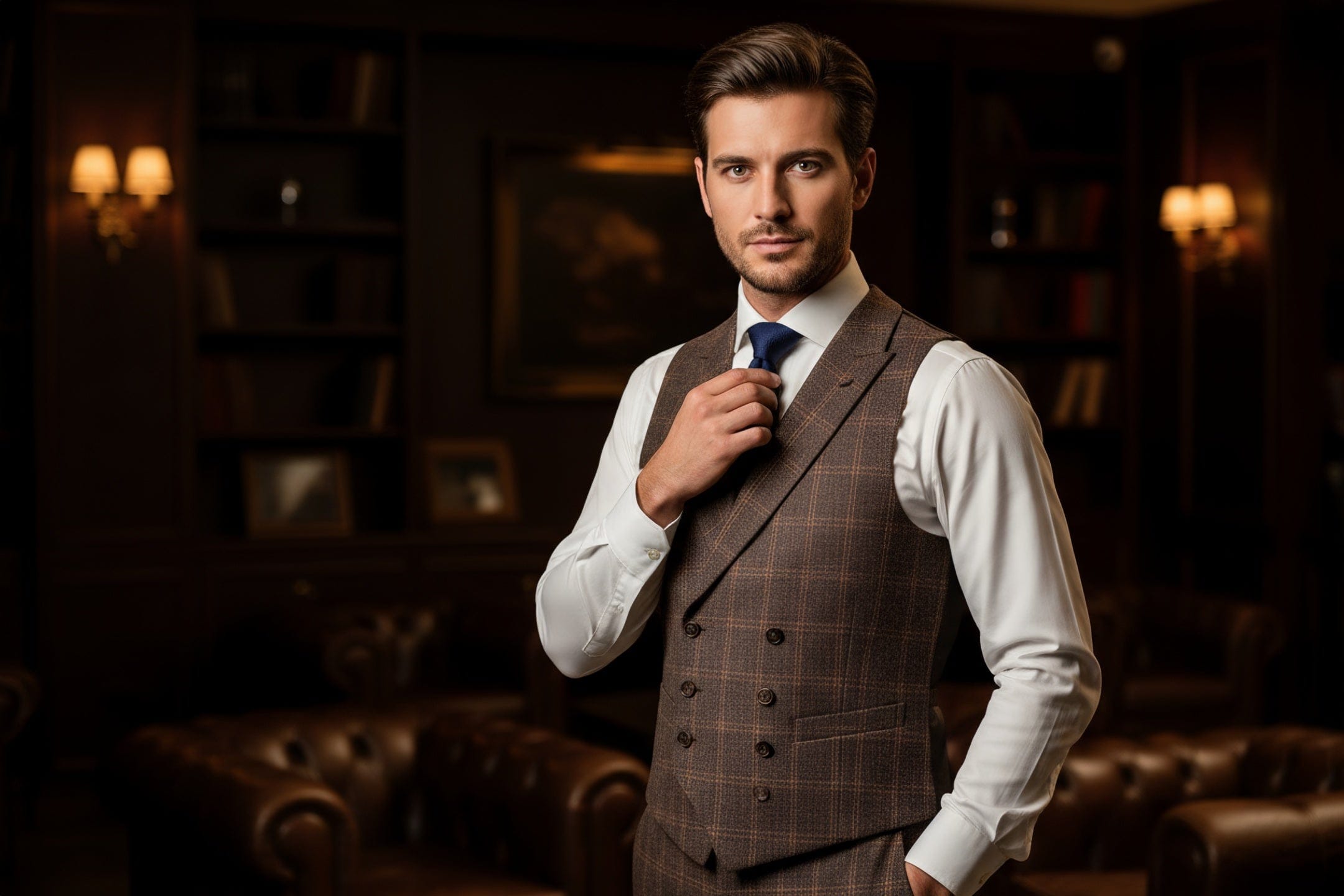




The right suit doesn't just make you look good — it makes you feel invincible. But with so many silhouettes, cuts, and lapel styles to choose from, knowing where to start can feel overwhelming. This guide breaks down the most important decisions you'll face when choosing a suit: slim fit vs. relaxed fit, and single breasted vs. double breasted — and exactly which body types each style flatters most.
PART I
Slim Fit vs. Relaxed Fit

Fit is the single most important factor in how a suit looks on your body. Before you consider fabric, color, or pattern, you need to understand the fundamental difference between a slim cut and a relaxed cut — and which one is engineered for your proportions.
The Slim Fit Suit
A slim fit suit is cut close to the body throughout — the chest, waist, hips, and trouser leg all follow your natural silhouette with minimal excess fabric. The jacket is typically shorter in length, the lapels are narrower, and the trousers are tapered from thigh to ankle. The result is a sharp, modern, and streamlined aesthetic that reads as polished and contemporary.


Who Should Wear Slim Fit?
Slim fit suits are engineered for men with lean, athletic, or proportionate builds. Specifically:
- Tall & Lean Men: The close cut elongates the frame further and prevents the suit from overwhelming a slender silhouette.
- Athletic Builds (V-taper): Men with broad shoulders and a narrow waist benefit enormously — the slim cut accentuates the natural taper.
- Average Height, Slim Frame: A slim fit adds structure and definition where the body may lack natural bulk.
- Young Professionals: The modern silhouette signals contemporary style awareness — ideal for creative industries, client-facing roles, and social occasions.
When to Avoid Slim Fit
If you carry weight in the midsection, have a larger chest, or have muscular thighs, a slim fit will pull, restrict movement, and create unflattering tension lines across the fabric. Comfort and confidence go hand in hand — never sacrifice one for the other.
The Relaxed Fit Suit
A relaxed fit — sometimes called a classic or regular fit — offers more room through the chest, waist, and seat. The jacket falls lower, the shoulders are slightly extended, and the trousers have a fuller leg. Far from being "baggy," a well-tailored relaxed fit suit is the hallmark of traditional sartorial elegance. Think of the power suits of Wall Street, the boardroom gravitas of a senior executive, or the effortless confidence of a man who has nothing to prove.

Who Should Wear Relaxed Fit?
- Broader, Stockier Builds: Extra room through the chest and seat prevents pulling and allows the suit to drape naturally — the key to looking effortlessly put-together.
- Larger Midsection: A relaxed cut skims the body rather than clinging to it, creating a cleaner, more flattering line.
- Shorter Men: Counterintuitively, a well-proportioned relaxed fit with the right trouser break can add visual height by creating a continuous vertical line.
- Senior Executives & Formal Occasions: The classic cut carries an air of authority and gravitas that slim fits simply cannot replicate.
- Comfort-First Wearers: For long days, travel, or extended events, the relaxed fit offers freedom of movement without compromising elegance.
Slim Fit vs. Relaxed Fit: At a Glance
| Feature | Slim Fit | Relaxed Fit |
|---|---|---|
| Silhouette | Close to body | Relaxed drape |
| Best For | Lean, athletic, tall | Broad, stocky, larger builds |
| Aesthetic | Modern, sharp, youthful | Classic, authoritative, timeless |
| Comfort | Moderate | High |
| Occasion | Business casual, events, weddings | Boardroom, formal, power dressing |
PART II
Single Breasted vs. Double Breasted
Beyond fit, the construction of the jacket's front — specifically whether it is single or double breasted — dramatically changes the visual impact, formality level, and body-flattering properties of a suit. This is one of the most consequential decisions in menswear, and one that is too often made without proper understanding.
The Single Breasted Jacket
The single breasted jacket features a single row of buttons down the front, with a narrow overlap of fabric. It is the most versatile and widely worn jacket construction in the world — appropriate for virtually every occasion from business meetings to black-tie events. The clean, uninterrupted vertical line of a single breasted jacket is inherently slimming and elongating.
Who Should Wear Single Breasted?
- Shorter Men: The vertical button line draws the eye upward, creating the illusion of height.
- Larger Midsection: The narrow overlap minimizes the visual width of the torso — far more flattering than the broad horizontal expanse of a double breasted front.
- Versatility Seekers: If you own one suit, it should be single breasted. It transitions seamlessly from the office to weddings, dinners, and beyond.
- First-Time Suit Buyers: The single breasted jacket is the foundation of any wardrobe — master this before exploring more advanced silhouettes.
- Warmer Climates: Less fabric overlap means better breathability — a practical advantage in summer or tropical settings.
The Double Breasted Jacket
The double breasted jacket features two parallel rows of buttons and a wide overlap of fabric across the chest. It is a statement piece — bold, commanding, and unmistakably sophisticated. Historically the choice of royalty, military officers, and the most powerful men in any room, the double breasted suit has experienced a powerful renaissance in contemporary luxury menswear. When worn correctly, it is arguably the most impressive silhouette a man can wear.


Who Should Wear Double Breasted?
- Tall Men: The wide lapels and horizontal button arrangement add visual width — ideal for tall, lean frames that benefit from added breadth.
- Broad-Shouldered Men: The structured chest panel amplifies an already powerful shoulder line, creating a commanding, authoritative presence.
- Confident Dressers: The double breasted jacket demands to be worn with conviction. It rewards men who carry themselves with posture and poise.
- Formal & High-Stakes Occasions: Board presentations, galas, weddings, and diplomatic events — the double breasted suit signals that you understand the weight of the moment.
- Men Who Want to Stand Out: In a sea of single breasted suits, a well-chosen double breasted jacket is an instant differentiator.
The Golden Rule of Double Breasted
Always keep a double breasted jacket buttoned when standing. Unlike a single breasted jacket, which can be worn open casually, an unbuttoned double breasted jacket looks unfinished and sloppy. The jacket is designed to be fastened — it is part of the silhouette.
Single vs. Double Breasted: At a Glance
| Feature | Single Breasted | Double Breasted |
|---|---|---|
| Visual Effect | Slimming, elongating | Broadening, commanding |
| Best For | Shorter, slimmer, versatile needs | Tall, broad, confident wearers |
| Formality | Business to black-tie | Smart casual to ultra-formal |
| Versatility | Very high | Moderate (occasion-specific) |
| Statement Level | Understated elegance | Bold, powerful, memorable |
PART III
Your Complete Body Type Guide
Now that you understand the individual elements, here is your definitive reference — matching body type to the ideal combination of fit and jacket construction.
🏋️ Athletic / V-Taper Build
Recommended: Slim Fit + Single Breasted (2-button)
The slim cut celebrates your natural taper. A single breasted jacket keeps the chest clean and uncluttered, letting your physique do the talking. Opt for structured shoulders and a suppressed waist.
📏 Tall & Lean Build
Recommended: Slim or Relaxed Fit + Double Breasted
Your height is an asset — use it. A double breasted jacket adds the visual width and gravitas that a lean frame can carry beautifully. Wider lapels and a 6x2 button configuration create a powerful, proportionate silhouette.
🧱 Broad & Stocky Build
Recommended: Relaxed Fit + Single Breasted
Avoid double breasted — the wide front panel will amplify your width. A relaxed single breasted jacket with a clean vertical button line creates a slimming effect. Choose a slightly longer jacket length to elongate the torso.
📐 Shorter Stature
Recommended: Slim Fit + Single Breasted (2-button, high button stance)
Every detail should work to create vertical lines. A slim fit with a high button stance, narrow lapels, and tapered trousers with no break will maximize your perceived height. Avoid double breasted — the horizontal emphasis works against you.
⚖️ Average / Proportionate Build
Recommended: Either fit + Either construction — guided by occasion
You have the most flexibility. Use slim fit for modern, youthful occasions and relaxed fit for formal or executive settings. Experiment with double breasted for high-impact events. Your body type is the canvas — the occasion sets the direction.
The Final Word
The best suit is not the most expensive one — it is the one that fits your body, suits your lifestyle, and makes you feel like the most confident version of yourself. Understanding the relationship between your body type and your suit's construction is the foundation of true personal style.
Whether you are drawn to the sharp precision of a slim fit single breasted suit or the commanding presence of a relaxed double breasted jacket, the right choice is always the one made with intention.
Ready to Find Your Perfect Suit?
Shop the Collection